
Roundism Art Movement
ROUNDISM is a contemporary, secular art movement founded by Michal Plis in 2022. Inspired by nature and established art principles, it explores the universe and ourselves using only completely round, edgeless forms: dot, circle, ring, and sphere. Developed extensively at the Melbourne Studio of Art and unveiled at the 2025 'Glimpse of Another Universe' exhibition, Roundism serves as a shared visual language in both abstract and figurative paths.Welcome to this Roundism Art Movement official site! Artists, collectors and art professionals drawn to ordering chaos through patterns of the round are invited to explore the movement and contact Michal Plis to learn more.
Roundism Articles
Roundism Manifesto
By Michal Plis, Unveiled on 15/10/2025 at Louis Joel Gallery, Altona, Vic, AustraliaRoundism is a new art movement exploring the universe and ourselves through purely round forms: dots, circles, rings, and spheres. The movement uses only these forms and excludes: ovals, flowing patterns, straight lines, or other forms. It pursues completely round, edgeless art.Roundism interprets the figurative universe or the horizons of abstraction as a seamless space, where the Round emerges in its purest forms, guided by established art principles. Michal Plis conceived Roundism in 2022 and has been developing it ever since, immersing himself daily and learning to see the world through its concepts.Roundism finds inspiration in the designs of the Intelligent Creator: the shapes of stars and planets, the universe itself, circular forms in nature, and the round structures within our bodies. These patterns reveal harmony, continuity, and endless possibilities. Since the early explorations of abstraction by Hilma af Klint, some artists have touched on ideas similar to Roundism. This movement develops these patterns systematically, encompassing the full scope of completely round, edgeless forms.Michal explores Roundism in abstract form, searching for the hidden and unknown to imagine a round universe of his own making. This manifesto by Michal Plis invites other artists to explore Roundism, through either abstract or figurative paths.
Roundism Core Principles
The principles of Roundism are strict. The visual language is based on a search for purity. The movement's philosophy is to use only the pure, round forms, and not mix them with other types of shapes.
Forms That ARE Part of Roundism
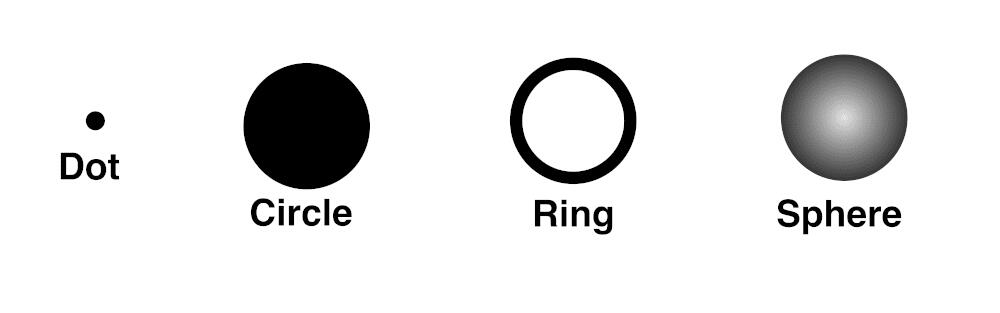
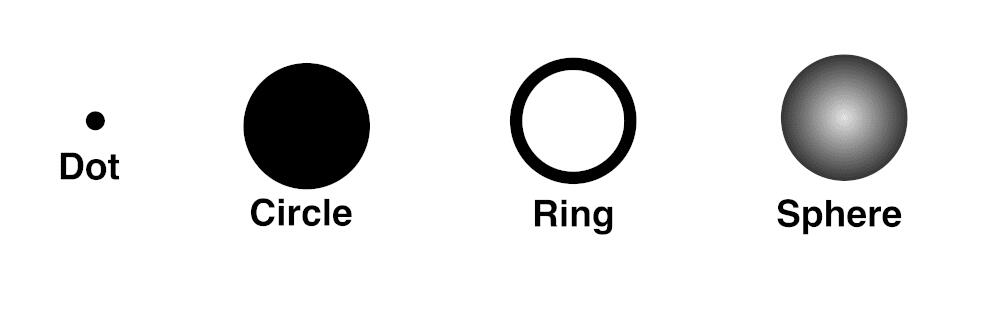
Circle: is completely round, edgeless form.
Dot: is completely round in this minutest single point. It is edgeless form.
Ring: is Completely round twice (or more times depending on how many rings in rings).
Sphere: is completely round from all sides 3Dimensionally.
Combinations of the above are allowed.
Forms That are NOT Part of Roundism
The forms that are excluded are deliberately non-round shapes, such as:
Ovals: which "start round but then stray" and do not have a uniform, edgeless path.
Straight Lines: which have an end.
Rectangles: which have "edges" and "corners that aren't Round".
Triangles and other forms with straight sides or corners.
And any other forms.
Perfection versus Imperfection
This philosophy embraces both the perfection of pure geometry and the organic quality of the human hand.A perfectly round form (made with a stencil, compass, or digital tool) and an imperfect, hand-drawn round form (which suggests "Round" through its organic, shaky line) are both valid expressions of Roundism.The intention to represent a dot, circle, ring, or sphere is what matters. Roundism "leaves room for imperfection", and artists can freely mix these perfect and imperfect round forms together.
Definitions of Roundism
The visual language of Roundism is built on highly specific geometric and philosophical boundaries. To fully grasp the movement's search for purity and coherence, it is essential to clearly define the exact nature of the forms we use, and to distinguish this structured, secular movement from other personal styles or historical uses of the term.
Definition of "completely round, edgeless forms."
A common point of discussion is, "Don't circles have an edge?" This is a question of geometric definition, and the philosophy of Roundism is very specific.
In Roundism, a "completely round" form is one that has a continuous, uniform boundary. It has no corners, no straight sides, and no sections that 'veer off' a perfect circular path (which distinguishes it from an oval). It is a pure, 'never-ending edge.'
In geometry, an "edge" is a term most often used to describe a line segment that connects two "vertices" (corners) in a polygon (a shape made of straight lines). A rectangle has four edges and four corners; a triangle has three.
The four pure forms of Roundism—Dots, Circles, Rings, and Spheres—are not polygons. By academic definition, they do not have vertices, corners, or straight-line sides.Therefore, in the language of Roundism, all four are considered "edgeless forms." The term "edgeless" is used by this movement to mean "without corners or straight sides," which is the quality the movement explores.
What Roundism Is (And Is Not)
It is important to differentiate this movement from other uses of the term "Roundism" circulating on the internet.
This Roundism is not the personal painting style of Corne Akkers, which merges Cubism with a more fluid, non-circular approach.
It is not the personal musings of Terry Long on "Spiralism and Squareism."
While any artist is entitled to their own style, the Roundism defined here is a fully structured, secular art movement with a specific, pure philosophy: a search for the perfection of completely Round, edgeless forms and it's inherent coherence.A Note on Secularism:
This is a secular art movement. It is important to distance Roundism from any specific metaphysical beliefs or faiths. Those are personal. This movement is a shared visual language, separate from religious or historical attachments.
Roundism Philosophies
Roundism is a continuous exploration of the edgeless form. The following pillars represent the core philosophies discovered so far in our search for unity and resonance.
Coherence
Roundism is a visual methodology for achieving coherence or unity. It demonstrates harmony through the path of the round. Through patterns of round, it orders even the most chaotic subject matter.A key aspect of the movement, for example, is exploring the networking and connections between forms. This aims to find a greater coherence, not just within one artwork, but among all artists pursuing this movement, whether in abstract or figurative approaches.Where Cubism often explored mechanistic or erratic fragmentation, Roundism explores the harmonious relationships and deeper meanings that round objects can create in their arrangement.
Perfection of the Round
While nature rarely produces a perfectly straight line, the human world is full of them. Roundism is a rigorous, almost obsession-driven search for the perfection of the round form, the edgeless ideal. However, we acknowledge that the human hand is inherently imperfect, as mentioned in our core principles. Therefore, it is the intent towards perfection that defines the work, as a philosophical option in the artists work.Through relentless practice, as famously seen in the mastery of Da Vinci, an artist may one day achieve the perfect circle, yet even then, anything in this physical universe is technically imperfect. It is the thought of the perfection of the round that we truly pursue.We also acknowledge that in the physical universe, a "perfect" circle may not exist. Atoms vibrate; gravity warps space; materials have flaws. Yet, the concept of the Perfect Round: the singularity of the Dot, the unbroken plane of the Circle, the infinite loop of the Ring, and the flawless vessel of the Sphere, remains the ultimate standard of order.Unlike Cubism, which analyzes reality by shattering it into shards and planes (fragmentation), Roundism seeks to heal the image. We reject the corner, the point where energy stops and conflict begins, in favor of the continuous perfect curve.It is the rejection of the corner in favor of the round, where existence is continuous, flawless, and infinite. We strive to manifest this higher geometric truth in a flawed world. The "Perfect Round" has no beginning and no end. It is the ultimate symbol of endurance, a pure perfection that is always there and always will be, offering a glimpse of an order that transcends our chaotic reality.
Infinite Loop
A round form is not merely a shape; it is a kinetic vessel. Drawing on the physical principles of Magnetism and the Whispering Gallery Mode, Roundism acts as an active trap for light and attention.This is the philosophy of the Infinite Loop: the capacity of art to capture energy, force it into a continuous circuit, and amplify it. Unlike linear forms where focus "leaks" off the edge, a Roundist work exerts a gravitational pull, holding the viewer's gaze in a self-sustaining orbit.Inside this loop, energy does not fade, it builds. The artwork functions as a perpetual engine of focus, filtering out the chaotic noise of the exterior world. It circulates the viewer’s attention until it achieves a state of resonance, eventually releasing a purified, stronger clarity back to the observer.
Roundism Influences
The drive to explore completely round, edgeless forms did not emerge in a vacuum. It is a pursuit deeply rooted in both the history of human creativity and the structural fabric of the cosmos itself. While earlier artists have brushed against these concepts without defining them as a singular, unified movement, the undeniable evidence of the "Round" as a universal standard of order surrounds us. This section explores the historical predecessors who paved the way, alongside the profound natural phenomena that inspire Roundism's pure visual language.
Historical Roots & Influences
Artists have been touching this art movement, this search for the pure-round, for over a century, but not quite clearly understanding it enough. Some of the historical and influences are listed below:
Giotto di Bondone: The historic ideal of artistic skill has long been measured by the circle. Renaissance chronicler Giorgio Vasari notes that when the Pope requested a proof of skill for a commission at Saint Peter's Basilica, Giotto simply dipped his pen in red ink and, using his elbow like a compass, drew a flawless freehand circle. This singular stroke won him the commission and gave rise to the historic Tuscan proverb, rounder than the O of Giotto.
Leonardo da Vinci: While Leonardo's geometric pursuits, such as his Vitruvian Man, were mathematically driven by the Roman architect Vitruvius and classical geometry rather than Giotto's specific story, his notebooks show he revered Giotto's historic return to the raw perfection of nature. For Leonardo, the circular curve represented the ultimate isotropic boundary of light and spatial dynamics, establishing a clear conceptual line of heritage from Giotto's red stroke to the complex geometries of the High Renaissance.
Australian Aboriginal Art: This ancient cultural art movement... incorporates geometric aspects of Roundism such as dots, circles and rings. It is more about story telling using various visual symbology not just dots or circles. In fact the native Australian art encompases lines and other shapes as well.
Pointillism: This style simply focuses on dots. Roundism goes deeper focuses on every shape that is possible that is round.
Suprematism: This art movement focused on the fundamentals of geometry (circles, squares, rectangles). Roundism sets the rules that is round objects only... the pure edgeless abstraction.
Pioneering Artists
Early abstractionists like Hilma af Klint pioneered abstract circular forms and rings.
Wassily Kandinsky's painting "Several circles" (1926) explores circular objects and dots as well as spheres.
Yayoi Kusama developed a fixation on polka dots... and is an important link towards the search for the Roundism world.
Quite a few have looked into this to some degree in the 20th Century and the 21st Century we are in now.
The "Round" in the Universe
It's clear to me from it all that roundness is everywhere in the universe. Everywhere we look there's something round.
In the Cosmos: Isotropic gravity is where a uniform shape such as a sphere is formed due to gravity pulling atoms equally from every direction.
Stars maintain an almost perfect spherical shape.
Galaxies: Elliptical and Spiral galaxies have round-ish or round shapes... to order the stars in a circular orbit.
Planets that orbit around stars are usually round.
Einstein Rings: This is when light... is bent by the gravity of a large celestial body... in the shape of a ring.
On Earth:
Rainbows: The rainbow is actually a round ring! If you view the rainbow from a plane high enough you can see a fully round ring.
Solar Halos: A rare phenomenon... that forms a ring of light around the Sun... when sunlight passes through... ice crystals.
Water: Tiny sized raindrops are usually close to spherically shaped because of their surface tension.
In the Human Body:
Cells: For the most part cells are spherical, round or elongated.
Eyes: Then eye balls are round and the iris in our eyes is round... to optimise structure for the collection and focus of light.
In Human Psychology:
Carl Jung: He explores the symbolism prevalent in human society around the Circle and its importance in psychology... showing up in myths... and in people’s dreams.
The Book of Circles: Manuel Lima states... "the circle became a universal metaphor embraced by virtually every civilization that has ever existed."
It boggles my mind to think how much of the round is all around us (even the word around has the word round in it). I am writing a book which will go into a lot of detail on these observations and how they connect with Roundism.
Contact Us
The Roundism art movement was conceptualized by Michal Plis in 2022. The 2025 exhibition, 'Glimpse of Another Universe', showcases the first examples of this exploration.This is the beginning. We are just getting started in exploring Roundism as a movement, and more blogs, research, and information is to come.Invitation: We are inviting other artists to join. If this visual language speaks to you, reach out to learn more about the techniques, mediums, and visual aspects of Roundism. Select the "let's chat" blue button to send me a message to get started.
Legal Terms & Policies
This section outlines the legal policies protecting the Roundism art movement, its manifesto, and associated artworks. To protect this intellectual property, the terms and conditions below govern your use of this site, as well as the other websites operated by the movement's founder at michalplis.com, renata.michalplis.com, and shop.michalplis.com.By accessing these websites, purchasing artwork, or engaging with our content, you agree to these foundational guidelines.
Terms & Conditions — Outlines the core rules, intellectual property protections, and general agreements for navigating our websites and using our services.
Payment Terms — Details our accepted payment methods, digital surcharges, and specific financial rules for purchasing artwork directly or via third parties.
Privacy Policy & GDPR — Explains how we securely collect, use, and protect your personal data in strict compliance with Australian and global privacy regulations.
Website Disclaimer — Clarifies the limitations of our liability regarding the information, external links, and copyright of the content provided across our platforms.
Affiliate Disclosure — Discloses our relationships with third-party brands and explains how we may earn commissions from recommended links.
Affiliate Offers — Provides specific details and links regarding the third-party products, such as LawPath, that we currently partner with.